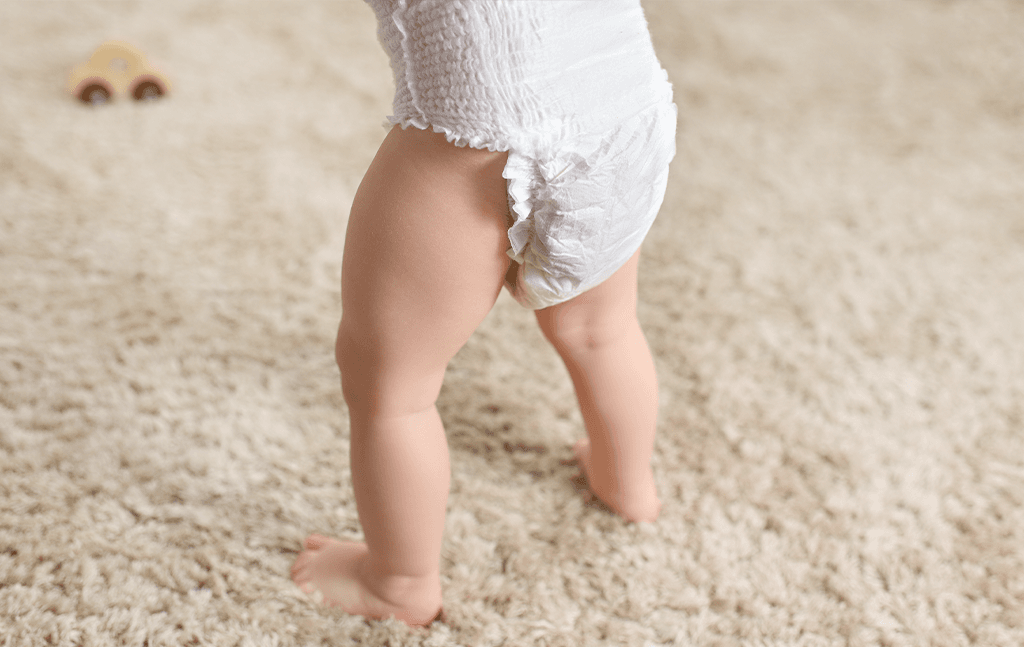
The skin in the diaper area of babies, like the rest of the skin, is much thinner and has a different structure than adult skin. The outer layer is much thinner and the cells are more sparsely distributed than in adults, and the sebaceous glands are still inactive, so the lipid protective layer is almost non-existent.
Babies are born with a protective covering called vernix, which will peel off in the first few weeks, and there is no need to force it off, as it is a protective skin barrier.
However, when it comes to the diaper region of babies, we have to remember that this part of the skin is more exposed to urine and feces, and considering the previous information and the still undeveloped lipid layer of the skin, we have to take special care of that region.
In fact, “baby butt cream”, “Pavlović cream”, “lanolin cream” is the first cosmetic form that a child encounters. The cream has maintained its basic composition for decades; namely, petroleum jelly, lanolin, water and oil. Of course, there are also variations such as adding peru balm, zinc oxide, oil-soluble vitamins, and even in the not-so-recent past, boric acid. However, the focus is on mechanical skin protection in the form of occlusion, and lanolin and petroleum jelly perform this task perfectly. For this reason, such creams, or rather ointments, are very greasy, do not absorb and leave a protective film on the skin.
Now we come to the classic problems of raw materials; namely the issues of petroleum jelly and lanolin. Namely, petroleum jelly is a raw material that is obtained by processing crude oil through various processes (distillation, filtration) in order to separate certain components and obtain a quality that meets the needs and standards of the cosmetics industry. When using petroleum jelly, there is no fear of penetration into the skin, but petroleum jelly itself is not a desirable ingredient in natural cosmetics, and certification bodies such as COSMOS, NaTrue and the like do not approve it in products.
On the other hand, we have lanolin, a natural fat that coats sheep’s wool and thus protects the animal itself from cold, rain and other adverse conditions. This is precisely where its effect on our skin lies. However, in the last few years, we have been noticing more and more problems with lanolin. From shortages to very poor quality. The biggest problem is the treatment of animals, or rather their hair, with various biocides against parasites and vermin that inhabit animal hair. Because of this, there are often residual pesticides or heavy metals, and many allergic reactions have been reported.
Precisely for all the above reasons, the industry puts new raw materials on the market that have the same function, but are more natural and without allergic reactions. In addition to protecting the diaper area in children, it is important to emphasize that this type of care is also recommended for bedridden patients who use adult diapers.
- Phase A and Phase B are heated in parallel to 60˚C.
- When both phases are at the same temperature, we emulsify.
- Below 40˚C we add Geogard 221.
- We fill it into pots.
- Softisan 649 is a vegan alternative to lanolin, completely free of impurities that can cause skin reactions, provides the creation of a protective film on the skin in numerous types of formulations.
- Naturelyn 500 is a plant-based petroleum jelly that is used as a very important alternative to traditional mineral-based petroleum jelly.
- Avocado oil is an excellent ally in the fight against skin inflammation, irritation, redness, itching and swelling. It is also used as an aid in the treatment of eczema and psoriasis and in the care of nails and the skin around the nails.
- Geogard 221 preservative