 Purchase this item and get
Your cart is currently empty!.
You may check out all the available products and buy some in the shop.
Continue Shopping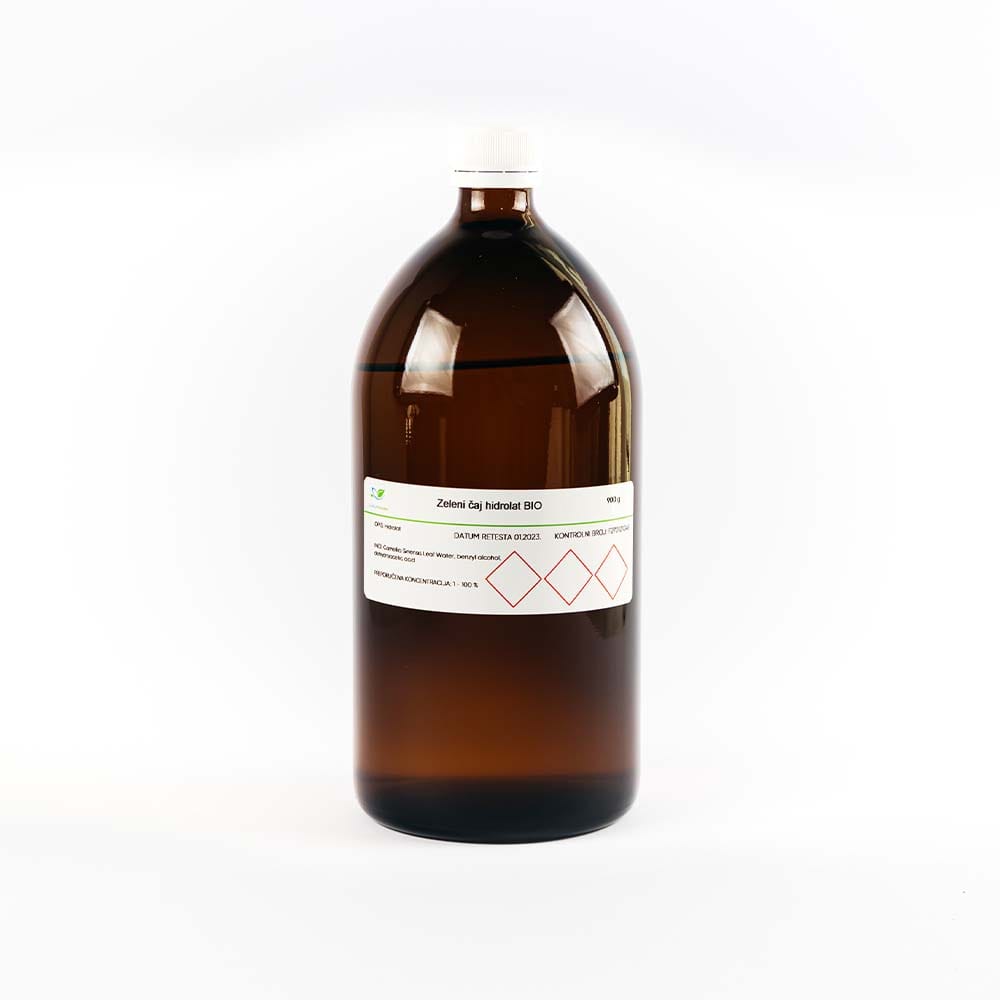
In stock
Price range: 4,01 € through 236,25 €
Green tea hydrolate penetrates the skin very quickly, and enhances the metabolism of the breakdown of fat cells and the reduction of cellulite. It contains a powerful complex of antioxidants such as EGCG (Epigallocatechin gallate) which protects the DNA in the skin from damage. Restores collagen synthesis, thus reducing fine wrinkles.
https://mireillelab.com/en/webshop/green-tea-hydrolate-organic-canned-geogard-221/


Green tea (Camellia Sinensis Sinensis variety) has been used for almost 5,000 years and is considered one of the most powerful medicinal plants in the world. Many sources prove that green tea has been drunk for centuries in China and Japan, almost exclusively for its medicinal properties.
Green tea is tea whose natural oxidation stops quickly after picking. This results in non-oxidized tea, which maximizes the content of EGCG and other catechins. Green tea also contains a high concentration of L-theanine and a lower concentration of caffeine than black tea.
The tea tree, tea plant or simply tea, (Camellia sinensis) is a shrub native to the Far East, of the Theaaceae family. Three species of this species are cultivated worldwide: Camellia sinensis assamica (Assam), Camellia sinensis sinensis (Yunnan) and Camellia sinensis cambodiensis. The main producing countries are China, India, Sri Lanka, Vietnam, Taiwan, Japan, Nepal, Turkey, Kenya and Tanzania. It should be noted that tea from Sri Lanka and Taiwan is sold under the former names Ceylon and Formosa.
Benefits of green tea hydrolate
Green tea hydrolate penetrates the skin very quickly, and enhances the metabolism of the breakdown of fat cells and the reduction of cellulite. It contains a powerful complex of antioxidants such as EGCG (Epigallocatechin gallate) which protects the DNA in the skin from damage. Restores collagen synthesis, thus reducing fine wrinkles. It also has anti-inflammatory effects thanks to its polyphenol and catechin content, making it excellent for acne, irritation, and skin redness.
Green tea is traditionally used for its antioxidant and cleansing properties.
INCI: Camellia Sinensis Leaf Water, benzyl alcohol, dehydroacetic acid
| Weight | N/A |
|---|---|
| Zapremina | 100 g, 200 g, 450 g, 900 g, 4 kg, 10 kg |