 Purchase this item and get
Your cart is currently empty!.
You may check out all the available products and buy some in the shop.
Continue Shopping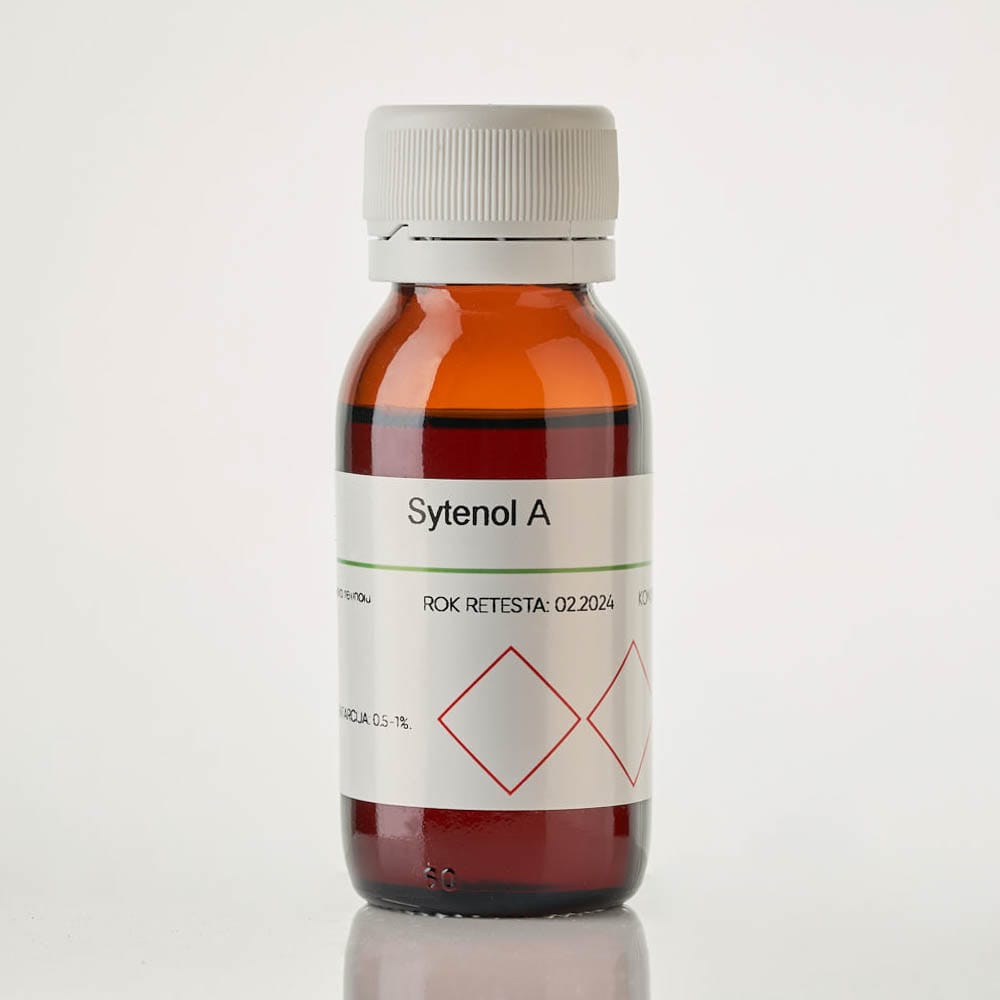
Out of stock
Price range: 42,60 € through 2.875,50 €
Sytenol® A is the first natural alternative to retinol without any of the negative effects associated with retinol. A well-defined compound (over 99% pure), Bakuchiol has been clinically shown to reduce hyperpigmentation and wrinkles as effectively as retinol, with better skin tolerance. Yes, Retinol has found its match.
https://mireillelab.com/en/webshop/sytenol-a-bakuchiol-herbal-retinol/


Inci: Bakuchiol
Recommended concentration: 0.5 -1.0 %
Soluble in vegetable oils and lipids
Sytenol® A is the first natural alternative to retinol without any of the negative effects associated with retinol. A well-defined compound (over 99% pure), Bakuchiol has been clinically shown to reduce hyperpigmentation and wrinkles as effectively as retinol, with better skin tolerance. Yes, Retinol has found its match.
Sytenol® A is as effective at slowing down skin aging as:
Retinol (first generation):
Side effects:
Sytenol A is effective against 4 risk factors for acne:
Plant profile:
Family: Leguminosae
Subfamily: Papilionaceae
Genus: Psoralea
Species: corylifolia
The plant from which Bakuchiol is derived, Psoralea Corylifolia, is endemic to certain Asian countries such as the Indian Himalayan regions of Pakistan and China… It is a wild species that has been used in Ayurvedic medicine for centuries – a wild legume that grows from 60-100 cm and takes 7 to 8 months to mature.
Seeds containing Bakuchiol are wildly harvested between December and January.
Traditional use:
The plant Psoralea Corylifolia is a part of the “Ayurvedic Pharmacopoeia of India” (Part I- Volume I) published by the Department of Ayush, Ministry of Health and Welfare, Government of India. This plant is also listed as a ‘Common Medicinal Plants of Ayurveda’ on the National Health Portal.
The entire plant is used to treat various conditions such as laxatives, aphrodisiacs and diuretics. However, the seeds, commonly called babchi seeds, have significant medicinal properties, especially for skin diseases. It is used topically and internally to treat psoriasis.
Bakuchiol in cosmetics
In cosmetics, Babchi seed extract cannot be used due to the presence of phototoxic phytocompounds. Although bakuchiol has shown many physiological properties and has been known for over 45 years, its first commercial use in topical application occurred only in 2007 when it was introduced to the market under the trade name Sytenol® A, a bakuchiol with a purity of 99%. Free of unwanted compounds, it is the only version of bakuchiol registered under REACH (EC # 685-515-4), a European Union regulation aimed at improving the protection of human health, especially in cosmetics.
Bakuchiol Identification
Bakuchiol is a meroterpene (a chemical compound with a partial terpenoid structure) in the class of terpenophenols.
It was first isolated in 1966 by Mehta et al. from the seeds of Psoralea corylifolia and was named Bakuchiol based on the Sanskrit name for the plant Bakuchi. Bakuchiol is mainly obtained from the seeds of Psoralea corylifolia, a plant used in Ayurvedic and Chinese systems of traditional medicine. The seeds of this plant contain various coumarins, including psoralen. which is widely used in Indian and Chinese medicine for the treatment of various diseases.
How does Bakuchiol work?
The gene expression profile is now considered a molecular signature of the compound. A simple side-by-side micro-irradiation experiment of retinol and bakuchiol showed that they have no close structural similarities, but show a similar pattern of action on certain key anti-aging genes and proteins.
Enjoy retinol-like benefits without the side effects!
The University of California conducted a double-blind clinical study on 44 volunteers comparing pure Bakuchiol (Sytenol ™ A) and retinol, both used in a cream of the same concentration (0.5%). The study showed that the two active ingredients performed similarly in terms of photoaging (59% reduction in hyperpigmentation after 12 weeks).
However, the skin tolerates bakuchiol much better, especially when it comes to stinging and peeling (a significant difference compared to retinol). UC Davis ultimately concluded that bakuchiol could effectively improve signs of aging in the skin, and Bakuchiol is one alternative that is better tolerated by the skin than retinol.
Following this publication in the British Journal of Dermatology, Bakuchiol gained popularity in the media and was named one of the trendiest ingredients by Mintel in 2019.
Let’s look at it in a little more detail.
In terms of chemical structure, Bakuchiol is different from retinol. However, at the gene level, Bakuchiol and retinol have similar molecular signatures. First, it is an alternative to retinol, stimulating key anti-aging genes such as:
It also helps slow down the aging process thanks to its antioxidant protection: Bakuchiol limits direct oxidative damage to cells, proteins and DNA.
It protects genes of the extracellular matrix and dermo-epidermal junctions by reducing matrix metalloprotease (MMP) activity. Finally, it controls inflammation and therefore plays a role in fighting inflammation (acne).
| Weight | N/A |
|---|---|
| Zapremina | 10 ml, 50 g, 100 g, 200 g, 450 g, 900 g |