fb Mentoring program - Mireille Lab

Mentoring Program

From formula to strategy — from product to brand with long-term direction

Welcome to the new generation of the Mentoring Program.

When we started the Mentoring Program a few years ago, the idea was to transfer knowledge about cosmetic product development to people who want to make something of their own.

Today, after eight generations of participants, numerous products that have passed through our laboratory, and brands that I have had the opportunity to follow from the first idea to the market, I look at this program much more broadly.

Because in the meantime, I’ve learned something very important: making a good cosmetic product is actually only one small part of creating a successful beauty business.

You can make a fantastic cream, you can have great active ingredients, a beautiful texture and packaging that looks perfect, but if you don’t know who you’re selling the product to, why someone would buy it, how much it really costs you, how much money is left after you sell it, through which channel you will reach the customer and how many you will have to sell for the whole story to make economic sense, you simply don’t have a business. You have a product.

And it is precisely this difference that became the foundation of what I want the Mentoring Program to be today, which is why we created the Beauty Startup Bootcamp .

Before we talk about emulsifiers, active ingredients, preservatives and formulations, I want to talk about the market, I want to ask those questions that are not always pleasant, but are necessary.

Who is your customer? What problem do you solve for them? Are there enough people who have that problem? What are they already buying? Why should they buy from you instead? How much are they willing to pay? How much can your product cost? What should your margin be? What happens to that margin when a distributor, pharmacy, or retailer comes into the picture? What is your MOQ? How much capital do you have to commit to the first production run? How long can that money be tied up in inventory?

And perhaps the most important question of all: Are we building a product or are we building a business? Because they are not the same.

That is exactly why I want to say very clearly who the 9th generation of the Mentoring Program is intended for.

This is not a program for DIY cosmetics enthusiasts, and there’s nothing wrong with that. Loving to formulate, research ingredients, and make cosmetics for yourself is a wonderful hobby, and there are training courses designed specifically for that.

But the Mentoring Program is not that kind of education.

In the 9th generation, we create new value and build a business from it.

Maybe you have an idea for your first product, maybe you already have a small brand and you’ve realized that you can no longer make decisions intuitively. Maybe you want to manufacture your own products, maybe you want to enter pharmacies, retail or another market. Or maybe you don’t even have a brand name yet, but you know you want to build a serious beauty business.

Then we need to talk about much more than just the formulation.

We need to understand the market, the competition and the consumer, we need to know how to make a financial construction of the product, determine the price, understand rebates, margins and profitability. We need to talk about positioning, sales, webshop, retail, marketing and communication. And then we need to understand what we are selling equally seriously.

And that’s where we get into the nitty-gritty.

The skin. Raw materials. Formulations. Active ingredients. Product development. Stability. Microbiology. Challenge tests. Dermatological tests. Packaging. Regulation. Safety Assessment. PIF. CPNP. GMP.

Not because I think a beauty brand owner has to stand behind a homogenizer their entire life, but because I think they have to understand their own product well enough to be able to make good business decisions about it.

He must be able to talk to the formulator, the manufacturer, the Safety Assessor, the packaging supplier, the designer, the distributor and the customer. He must understand why something costs what it does, why something lasts for months, why we can’t write a certain claim on the packaging and why a product that looks perfect after two days may not look that way after six months.

And then we come to the laboratory.

Because no matter how much you talk about a product, some things you have to see, do, and make mistakes with your own hands to truly understand them. And that’s why the Mentoring Program today is no longer an education about cosmetics formulation for me.

It is an education on creating a beauty business. From the idea, through the market and business model, to product development, production and the moment when that product needs to find its customer.

After eight generations, maybe that’s the biggest change in the way I look at this program, because I don’t want you to come out of it with just wording.

I want you to come out able to look at an idea and assess whether it makes business sense. I want you to know how to spot a mistake before it costs you thousands of euros. I want you to understand numbers as seriously as you understand the INCI list. And I want you to know that one day, when your product is sitting on a pharmacy shelf, a grocery store shelf, or someone’s bathroom cabinet, you know why it’s there and how you got it there.

That is why we are opening enrollments in the 9th generation of the Mireille Lab Mentoring Program.

We don’t build people who just want to learn how to make cosmetics, we build people who want to make something out of cosmetics.

If your goal is to create a product, build a brand, and turn it into a sustainable business; then we have something to talk about.

The Mireille Lab mentoring program begins with a new, strategic cycle – one in which we no longer start from the product, but from the foundation of the business. Because a successful brand is not created by chance, but from an understanding of why, how and with whom we want to do business.

Through eight carefully designed topics, we will learn how to define our own direction, build a brand structure and make smart decisions – from price to placement, from strategy to marketing. The program guides us from key business decisions to concrete tools that precede the actual development of products and formulations.

Together, we discover what type of business suits you best – a boutique brand, production for others or a retail brand with greater potential. We analyze the marketing path (online, B2B, B2C, retail, drugstores, pharmacies), form realistic and sustainable prices, learn what it means to “list”, how to build trust through branding and social networks, and how to set up a webshop as a sales tool and communication channel.
Mentoring program cycle

Eight new units

  • Understanding your own strategy and making business decisions based on vision, mission and goals.
  • The process of listing in retail, with an emphasis on technical, legal and marketing prerequisites, negotiations and rebates.
  • Financial construction of the business – price calculation, cost planning and profitability assessment.
  • Discovering market potential and identifying “holes” in the market where your brand has an opportunity to grow.
  • The ten most common mistakes in online sales, through practical examples and analysis of webshop experience.
  • Branding as a foundation of trust – defining identity, tone of communication and emotional connection.
  • Strategic positioning of the web shop as a mirror of the business concept and the digital experience it sells.
  • A marketing strategy that delivers real results, not just presence.

The goal of the program is for you to understand the foundations of your business before you define a product – so that every decision you make has purpose and strategy, not coincidence.

Enter the world of cosmetics

The world of creating cosmetics is a world of play and imagination, creativity and opportunities to explore the world around us, but it is also a world with a lot of unknowns, a lot of small obstacles on the road that accumulate and should be approached expertly and professionally. The search for these answers is often difficult and painstaking because the information is often unavailable, half-hearted and confusing.

Program objective

Its goal is to guide small producers and those who want to become one on the path to a product with as few mistakes and doubts as possible, thus saving time and money and bringing a complete brand with fruitful products to the market. Cosmetics will be made in accordance with global standards, and team members will learn best practices and receive recommendations for the use of each of the products made.

Quality

If you believe in quality, knowledge, and authenticity – the Mireille Lab Mentoring Program will help you turn that into a real, market-ready product. Because behind every successful brand is knowledge – and behind knowledge, a real mentor.
Professional part

When vision becomes formulation

After defining the direction, strategy, and business framework of the brand, we enter the second phase of the program – the professional, laboratory part. This is the moment when the idea becomes a concrete, functional, and safe cosmetic product.

Through this phase, we understand each layer – from skin to formulation, from ingredients to legal documentation. We learn:

  • Skin structure and function, anatomy and physiology, and the influence of active ingredients.
  • Shapes and types of cosmetic products (creams, serums, emulsions, gels, tonics, balms…) and how to choose the ideal format.
  • Ingredients – from functional to active, their synergy and stability in the formula.
  • Examinations and testing of products (stability, microbiology, dermatological tests, challenge tests).
  • Legal regulations and documentation, EU Regulation 1223/2009, PIF documentation, CPNP applications and ISO standards.
  • The laboratory-to-market process, including packaging selection, batch validation and GMP quality control.

The goal of the professional part is for you to know how to build a product that has purpose, structure and security – and that perfectly matches your business strategy.

Your brand could be next

Practical part

When knowledge becomes experience

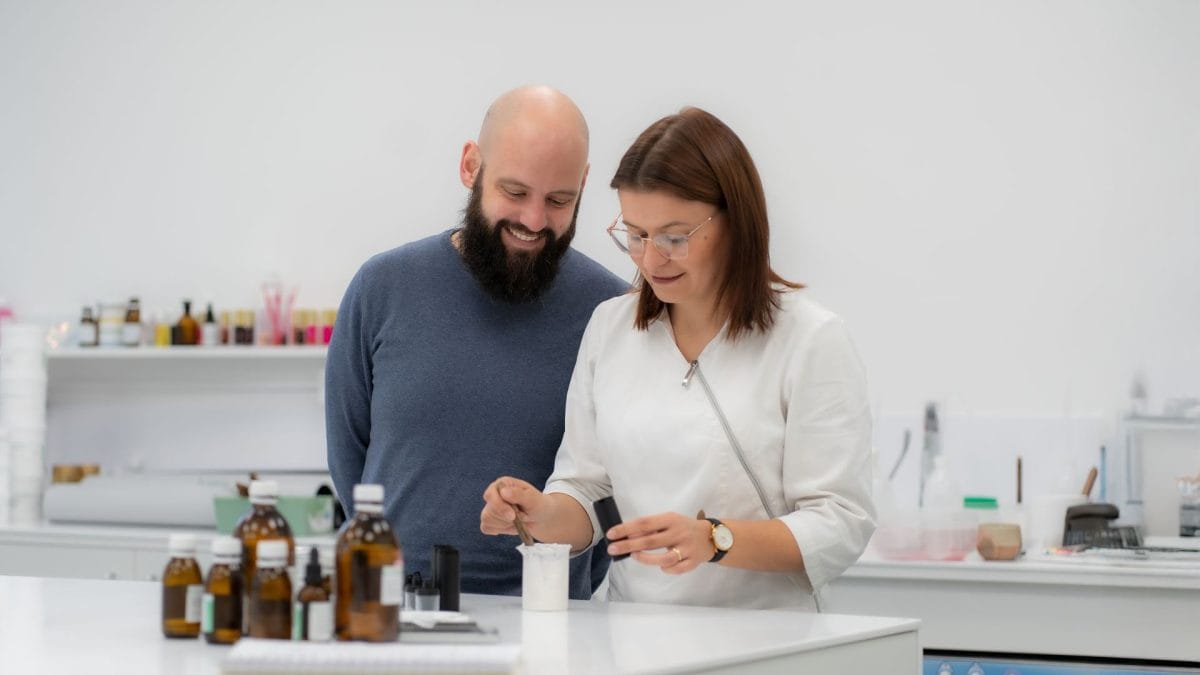
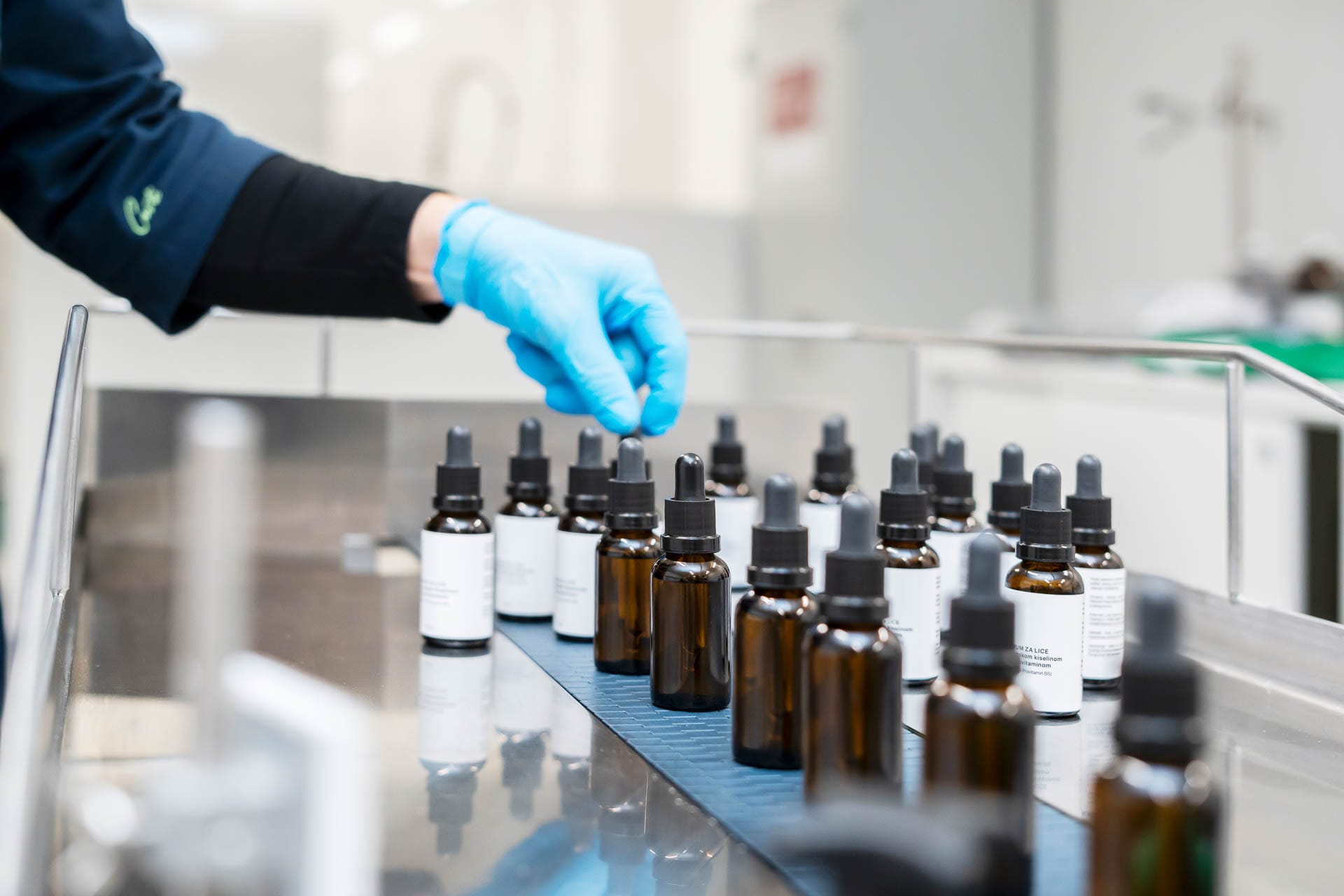
The third phase of the program takes place in the real Mireille Lab, where knowledge is turned into practice. Through a series of guided laboratory modules, participants develop real formulations, from concept to finished product, with expert mentoring and supervision. We learn:

  • Introduction to laboratory work and safety according to ISO 22716 standards.
  • Formulation exercises on different forms of products (emulsions, gels, oils, masks, scrubs).
  • Technological processes and production stages (heating, dispersion, homogenization, cooling, conservation).
  • Analysis and correction of formulations, error recognition and process optimization.
  • From the laboratory to the finished product, including filling, labeling and GMP documentation.

The goal of the practical part is for knowledge to become a skill – for each participant to understand the entirety of product creation, from idea to market, with a professional approach and understanding of responsibility.

Mireille Lab

Mentoring Program

The Mireille Lab Mentoring Program connects three phases that make up a whole:

  • Strategy – understanding where we are going.
  • Profession – knowing how to create.
  • Practice – learning to actually do it.

That’s the path from idea to brand.
This is Mireille Lab.

Professional part

This lecture focuses on the anatomy and physiology of the skin, explaining its basic structures and functions – it studies the biology of the skin, including its structure, composed of the epidermis and dermis, and its functions such as protecting internal organs, regulating body temperature, and producing vitamin D. It also covers the importance of the skin barrier in protecting against infections and external factors, and its ability to eliminate toxins.
The lecture emphasizes the importance of a healthy skin barrier and its role in protecting against infections and external harmful influences. It teaches about the layers of the epidermis, dermis and subcutaneous tissue, with a review of the different cells that participate in the renewal and protection of the skin. The lecture is useful for understanding how to improve skin care products that support its natural functions.
We deal in detail with definitions and regulations related to cosmetic products within the EU. We explain what is considered a cosmetic product, and define the roles and responsibilities of manufacturers, distributors, and other key participants in the supply chain. We also consider the safety assessments that are required before placing a product on the market, including the necessary documentation and notification obligations. We explain the labeling rules in detail, including the information that must be clearly stated on the products. The lecture also covers regulations related to product claims and requirements for their justification.
The lecture focuses on key aspects of setting a selling price, including considering production, distribution, and marketing costs. It also covers strategies for setting rebates and discounts for retailers, with the aim of improving business relationships and increasing sales volume. The lecture explains in detail the importance of a successful financial management, including cash flow management, budgeting, and financial planning. It also discusses the importance of a detailed analysis of costs and how they affect the final price of the product and overall profitability. The lecture emphasizes the importance of a strategic approach to pricing and financial planning for achieving long-term sustainability and success in the market.
The lecture “Market Potential Analysis” explores in detail how to determine the market value of a product or service, focusing on identifying markets with high growth potential. It focuses on defining the target market, estimating market size, analyzing the competition, and understanding market needs and barriers to entry. It also addresses product positioning and selecting a target market segment, emphasizing the importance of tailoring the marketing mix to the selected segments. SWOT analysis is a key part of the lecture, allowing for an assessment of the strengths, weaknesses, opportunities, and threats that affect business success.

Detailed treatment: vegetable oils, emollients and butters, essential oils and hydrolates, emulsifiers and co-emulsifiers, thickeners, cosmetic fragrances, solubilizers, preservatives, active ingredients, chelates, pigments, waxes, humectants, solvents – divided into 4 terms.

The lecture “Theory: Cosmetic Ingredients” covers in-depth coverage of key ingredients used in the production of cosmetics, providing a thorough insight into each ingredient category and their application in the cosmetics industry. Here are the basic elements covered:

  • Plant Oils – Discusses their nutritional properties, extraction methods and specific skin benefits.
  • Emollients and butters – Details about their role in skin hydration, product texture and ability to form a protective layer on the skin.
  • Essential oils and hydrosols – Their use in aromatherapy is explained, as well as their therapeutic effects on the skin and emotional state.
  • Emulsifiers and co-emulsifiers – Discusses their key role in stabilizing products containing oil and water, which enables the formation of creams or lotions.
  • Thickeners – Explain how these ingredients affect the viscosity and texture of cosmetic formulations.
  • Cosmetic fragrances – Their use to enhance the sensory experience of products, including potential allergic reactions, is being studied.
  • Solubilizers – Research is being conducted on how these ingredients enable the mixing of otherwise incompatible ingredients in formulations.
  • Preservatives – Their essential role in protecting products from microbiological contamination is explained, including an overview of different types of preservatives.
  • Active components – Focuses on ingredients that have targeted effects on the skin, such as anti-aging, moisturizing or sun protection.
  • Chelates – Their function in product stabilization and prevention of unwanted reactions with metals is considered.
  • Pigments – Details on their role in giving color to cosmetic products, including makeup and creams.
  • Waxes – Their function in forming protective barriers and adding texture to products is studied.
  • Humectants – It explains how these ingredients attract and retain moisture in the skin, making it soft and hydrated.
  • Solvents – Their use in formulations to dilute and dissolve other components is considered.

This lecture provides a comprehensive overview of ingredients used in the cosmetic industry, explaining their functions, benefits, and possible risks, and gives students and professionals a thorough understanding of how to create effective and safe cosmetic products.

The “Product Development Brief” lecture details the process of developing a cosmetic product, from idea to market. The product concept and specifications are discussed, including the category, the need it satisfies, the benefits, and the selling price. It also describes the product’s instructions for use, texture, color, feel, and scent. The target audience, competition, and prices of similar products on the market are identified. Packaging, materials, secondary packaging, and label design are elaborated in detail. “Must-have” ingredients, preservatives, and product claims are discussed. Aspects of manufacturing, pre-market testing, marketing strategy, and budget for a product launch are also considered. The lecture provides a comprehensive insight into the planning and execution of product development.

The lecture “Theoretical part: Instructions & guidelines for cosmetic product development” provides practical advice to participants on key aspects of cosmetic product development. During the lectures, the importance of balancing between the quality and cost of raw materials, as well as the optimization of formulations to make the product economically profitable, but also efficient, is emphasized.

  • Monitoring raw material prices: Participants are advised to regularly monitor the raw material market in order to be able to effectively manage costs and avoid potential financial losses due to price fluctuations.
  • Product ‘Fundamentals’: Emphasizes the importance of adding substantial ingredients that provide real value to the product. Participants learn how to avoid ‘diluting’ a product by ineffective or excessive use of expensive active ingredients that do not add real value.
  • Moderation with Active Ingredients: The importance of the correct amount of active ingredients is discussed in detail. Too many active ingredients can lead to product stability problems or potential irritations for the user, so participants are advised on how to optimally balance efficacy and safety.

The lecture focuses on Good Manufacturing Practices (GMP) standards in the cosmetics industry, emphasizing the importance of product quality and safety. Key topics include:

  • Introduction to GMP – The importance of GMP for quality and safety, and an overview of regulatory requirements.
  • Plant and equipment – ​​Standards for the design and maintenance of plant and equipment in accordance with GMP.
  • Raw materials and storage – Protocols for receiving, storing and handling raw materials.
  • Production process, development of SOPs – Overview of production stages from mixing to packaging, with an emphasis on documentation and consistency.

The aim of the lecture is to ensure understanding and proper implementation of GMP principles so that products are safe and of high quality.

In this module, participants will learn about key laboratory techniques that are essential for ensuring the quality of cosmetic products. Why is it important, what does it prove and show us, where are such tests performed, why is it necessary to perform them according to SOP?

The lecture “Current upcoming trends in the cosmetics industry” provides participants with an insight into the latest innovations, consumer habits and technological advances that shape the future of the cosmetics industry. The aim of the lecture is to equip participants with knowledge about how trend predictions can influence product development and marketing strategies.

Additional lectures:

  • Social networks and social media sales
  • Sales funnel
  • Design
  • Photo
  • Media

The theoretical part is held via the Zoom application, it is recorded and remains the permanent property of each participant

Each participant has 90 minutes available for individual consultations with the program manager, and before that they sign an NDA with the company to keep the exchange of information confidential.

Practical part

We work according to the principles of ISO 22716 (Good Manufacturing Practice), from hygiene and safety protocols to proper preparation, measurement and documentation.

Practical work on various forms of cosmetic products: emulsions, serums, gels, tonics, oils, masks, scrubs…

Participants learn to select raw materials, calculate percentages, measure pH, stability and texture, and recognize what the formula “says”.

Through practical work, we go through the stages of heating, dispersion, homogenization, cooling and preservation, while understanding the role of each step. The emphasis is on precision, documentation and process standardization.

Each formulation undergoes an analytical approach: stability, appearance, texture, scent, skin feel and compatibility with packaging. Participants learn to recognize mistakes and learn from them, just like in real production.

The final step includes filling, labeling and maintaining GMP documentation, so that participants understand the process from sample to market-ready product. The emphasis is on quality control, traceability and readiness for PIF documentation.

Other information

Enrollment in the new generation of the Mentoring Program (8th generation) is planned for March 2026.

Networking and socializing with small cosmetics manufacturers, media and influencers – Zagreb.

  • Written material for following lectures.
  • Laboratory diary.
  • Raw materials worth 150.00 euros for development
  • Raw materials that are not in the sales range are ordered specifically for the participant.
  • Whatsapp support group for questions, comments and motivation.
  • An opportunity to test and discuss products in a group.

Price: EUR 3,900.00 (VAT included)

Early bird 15% for payments made by 15.09.

Early bird 10% for payments until 30.09.

Full price after 30.09.2026.

Lectures begin in mid-October.

LECTURE PACE
Every other weekend

GROUP SIZE
7-10 people

Reviews

Mireille Lab

Mentoring program

The goal of the program is to guide small producers and those who want to become one on the way to products with as few errors and doubts as possible, thus saving time and money and bringing a complete brand with fruitful products to the market.
Are you interested?

Contact us

Fill out the short questionnaire and we will contact you back shortly.

    Shopping Cart
    Your cart is currently empty!.

    You may check out all the available products and buy some in the shop.

    Continue Shopping
    Add Order Note
    English